
Seedbombs - A little ball of nature
Whether in the city or in the countryside - you don't need a green thumb for our seed bombs, just a good throwing arm: they germinate quickly and even in adverse conditions.
- Choose the place to be flowered
- Put on a subversive face
- Throw, roll or place directly
- Wait for rain, perform a rain dance or help with the watering can
- Step: Enjoy the results every day

10x5 flower marbles in a bag


100 loose flower marbles, unpacked

Wildflowers in a cube – seed ball


3 x 1 Flower Marble – All Varieties

Seed bombs complete set – 8 varieties

Revenge seed bombs "Weeds"

Bee feast seed bombs

Seed balls "Sunflowers"

Christmas seed balls in a set of 3

5 seed bombs "Bee pasture"

Loose wildflower seed bombs, unpackaged


2-piece seed bomb surprise set


Seed bombs – pot balls


Seed balls "Bee Feast"

5 seed bombs "Gardening is therapy"


DIY flower marble kit

5 seed bombs "Rubber boots"

Here you will find helpful information about our seed bombs, seed balls, seedbombs, and seedballs.
Our handmade seed bombs from Germany come in eight different varieties, from wildflowers to delicious herbs and vegetables.
Packed in a small jute bag (always 8 per bag) and about the size of a walnut, seed bombs also make great gifts. They consist exclusively of local seeds, clay, and soil. Depending on the weather, the ideal throwing time is between April and August. Stored in a dry and dark place, seed bombs can easily be kept for up to two years.
How Are Seed Bombs Produced?
Each seed bomb is lovingly handmade. We roll most of the seed bombs ourselves. Additionally, we receive support from the local Lebenshilfe and the Meppen prison. The first step is always carefully sieving the soil to keep the seed bombs free of small twigs or stones. Then the soil, along with clay powder, seeds, and water, goes into a large mixer, which after some time produces a moist, sticky mass. We divide this into equal portions, which we then roll into balls about 2.5 cm in size – our seed bombs. After drying, the seed bombs are rock hard and ready to use for at least 2 years!
Seed Bombs – What Are They?
Seed bombs are small balls (or clumps) made of soil, clay, and seeds. Since the seeds are well embedded in the hard mix of soil and clay, they do not need to be planted. Instead, you can simply throw, roll, place, or sling the entire seed ball to its target location. The next rain softens the ball and activates the seeds, which then begin to germinate.
When is the best time to throw seed bombs?
The best time to throw seed bombs is in spring. You should definitely wait until nighttime temperatures no longer drop below freezing – because the cold can affect the seed's ability to germinate. A good time is always after the Ice Saints in May. After that, the weather is unlikely to cause problems. If it is very dry and does not rain after sowing your seed bombs, try to water the seed bombs regularly if possible.
Storage of Seed Bombs: How to Do It!
Here are three words for you: dry, dark, cool. Our seed bombs are durable for at least two years – only then does the seed’s germination ability gradually decrease. If you follow the points mentioned above, you can extend the lifespan of your seed bombs. But honestly: seed bombs are way too beautiful not to throw them and enjoy the colorful bloom, right?
Advantages of seed balls
The big advantage of seed bombs is their super easy use. Since the seed bombs are simply thrown onto the ground, you don’t need any gardening equipment or gloves. You don’t even have to bend down – basically a win-win for nature and your back. It’s no coincidence that our slogan for the seed bombs is: Throw, wait, enjoy. Sometimes life can be that simple! Nice, right?
Seed bombs have another advantage: thanks to their clay and soil shell, they are well protected and – unlike loose seeds – cannot simply be eaten by birds or blown away by the wind. Additionally, the clay-soil mixture provides all the nutrients needed for the seeds to start growing.
Giving seed bombs as a gift: Seed bombs as a gift idea
Are you looking for a creative gift for someone who already seems to have everything? How about a few of our seed bombs? Whether for a wedding, birthday, graduation gift, or just a little surprise in between – seed bombs are an extraordinary gift idea. And a beautiful one at that! We put a lot of love into the design of the packaging, so our seed bombs will surely bring bright smiles to the recipient’s face!
And who invented it? The history of seed bombs
Spoiler: In this case, it wasn’t the Swiss. ;) There are different opinions about how, when, and where the concept of seed bombs was invented. Some people believe the idea comes from the ancient Egyptians, who were able to quickly cultivate the fertile farmland left behind by the annual Nile flood using seed bombs.
But the name of the Japanese rice farmer Masanobu Fukuoka also comes up repeatedly when it comes to the history of seed bombs. After World War II, he is said to have developed a permaculture method in which he spread seed balls (called nendo dango) with rice and barley on his fields. This way, he could cultivate his fields without plowing – pretty clever! This idea was later also used in Japan to cultivate large fields.
Seed balls really became known in the 1970s when more and more people started throwing them to protest against concrete deserts, air pollution, and the development of urban green spaces. Seed bombs are practically the symbol of guerrilla gardening. To this day, seed balls are used for exactly this purpose: to create colorful islands in dull city centers, beautify neighborhoods, and grow your own food. But seed bombs are not just for guerrilla gardeners: they are also ideal for planting balcony boxes, making quick changes in the garden, or simply growing some herbs in your kitchen.
Make seed bombs yourself
You love DIYs and don’t want to buy seed bombs but prefer to make them yourself? Then our Seed Bomb DIY Kit is perfect for you! The green seed bomb kit contains everything you need for about 50 homemade seed bombs: sifted black soil, fine clay, a bee-friendly seed mix, detailed instructions with photos, and a great jute bag to store your finished DIY seed bombs. Rolling seed bombs yourself is not difficult and definitely a lot of fun! A great idea for kids’ birthday parties or as a creative gift!
How to roll your own seed bombs
The last few weeks have really worn us out, so we thought you might take a bit of work off our hands and roll your own seed bombs. Here’s how it’s done:
You have all options open when choosing seeds. But please do not select poisonous plants and only use native species! Ideal examples are poppies, daisies, cornflowers, small sunflowers, cinquefoil, lupines, marigolds, etc. Pumpkins are also fun.
Ingredients:
- Seeds (wildflowers / herbs / grasses / vegetables) (1 part)
- Good potting soil (peat-free, to protect the moors! Best to dry the soil beforehand and then sift it) (5 parts)
- Clay (available at building supply stores, best to use brown, red, or ochre clay) (3 parts)
- Water (1 part)
- A container and/or a surface for mixing the ingredients and drying the seed bombs
This is how the individual components become small seed bombs:

- Add clay powder and mix again.
- Slowly add water until a thick dough forms that can be easily shaped. If the dough is too watery, simply add dry ingredients afterward until it reaches the right consistency. The dough should be processed relatively quickly now, as it hardens fast.
- Now the actual 'rolling' of the seed bombs begins. Depending on the desired size (no larger than a walnut, as the seeds might sprout before the seed ball is fully dried), break off the appropriate amount of dough and roll it back and forth between your palms without much force until a smooth, round ball forms.
- Then place the balls to dry, for example on an old newspaper, and let them dry for 1–2 days. Afterwards, store them in a cool, ventilated place, preferably in a jute bag. :)

We wish you lots of fun squishing, kneading, and rolling! If you have any questions, send us an email or call us... of course, we would also love it if you share your experiences with us. Just use the review function in the next tab or send us some pictures of the green results. We will publish the best ones here!
Colorful seed bombs for kids
Seed bombs are a great way to introduce children to a love of nature and gardening through play. Even the little ones can help make our nature bloom! And to make throwing even more fun, we offer our small colorful flower marbles especially for kids. Red, green, yellow, and blue are the seed bombs for children – dyed with natural colors. From these colorful seed bombs grow beautiful, vibrant flowers that the little ones will be especially proud of!
Do you love getting messy and being creative together with your children, grandchildren, nieces, nephews, godchildren, etc.? Then just make your little seed bombs for kids yourselves! Our Flower Marbles Kit contains everything you need to make about 30 seed balls: seeds, nutritious garden soil, clay or loam powder, and a detailed step-by-step guide. So: Get ready, set, go to the mud kitchen!

Since 2011, we have been rolling seed bombs. Over the years, we have tried many soil-clay-water mixtures and seed combinations and have continuously optimized our seed balls. And yet, sometimes we get feedback like: Nothing is growing at all! We always ask our customers to send us photos of the sowing so we can see what might be the issue. And indeed, we often notice the same problems:
The most common problems when planting seed bombs
- The flower marbles are thrown but not watered enough. Especially at the beginning, the marbles need to soak once and then be kept moist. Ideally, you throw the flower marbles when 2-3 days of rain are forecast, or you must water them sufficiently. If it is very hot, it also helps to soak the flower marbles in a glass of water for about 10 minutes before sowing, as a kind of head start.
- A similar problem arises from the location. The marbles should not lie in direct sunlight because they dry out very quickly, harden again, and cannot germinate. An ideal location is partial shade.
- The flower marbles land on hard, compacted soil (e.g., a tree stump in the city). Dense lawn is also a common problem here. With enough rain, the flower marbles will start to germinate but quickly die again because they cannot root and absorb nutrients from the soil. Ideal is a loose, humus-rich soil.
- The seed bombs are buried. Especially passionate gardeners make this mistake because normal seeds are also covered with soil. However, the seeds are already planted inside the balls, so they get too little sun if the seed bomb is buried. Therefore, the marbles should not be buried but pressed into the soil at most halfway.
- The marbles are simply gone. Sounds silly, but it happens often because they are carried away or eaten by animals. Here, too, it helps to press the seed bombs about halfway into the soil. This also allows them to better draw moisture from the surrounding earth.

Where nothing else grows, the balls also have a hard time. The chances of success are low

Do not let the seed bombs dry out

Do not throw the marbles onto the lawn, into a meadow, or on already vegetated ground
This is how you do EVERYTHING right
Throw, wait, enjoy - we often promote our flower marbles with this saying. And it works, if nature cooperates. If you want to minimize the influence of nature, then we recommend the following approach:
- Soak the seed bombs or flower marbles in a glass of water for about 10 minutes
- Choose a location that is not in full sun all day and press the seed balls about halfway into the loose soil there
- Keep the seed bombs moist so they don’t harden again

Use good garden soil

Provide shade until germination

Keep soil and balls consistently moist
By the way, the marbles should not be exposed to frost, so the ideal throwing time is mid-May (after the ice saints).
But enough of the gray theory. Grab your flower marbles or seed bombs and bring more green to the gray!
Annual or perennial... that is the question here!
For our seed bombs, we use seed mixtures, most of which are annual, but some also contain a portion of perennial varieties. What does that mean? With the annual seed mixtures, you can admire the wildflower meadow in its full glory in the first year after sowing and don’t have to wait until next year or even the year after.
Germination begins about 14 days after sowing. After a total of 6 to 8 weeks, your colorful wildflowers will be in full bloom, depending on the season and weather conditions. Shortly before the end of flowering, the wildflowers self-seed, so with a bit of luck, you can enjoy the next generation the following year. The occasional perennial varieties need between one and two years to establish before they bloom. You can find out which mixes contain annual or perennial species under the respective seed bomb variety.
What our customers say
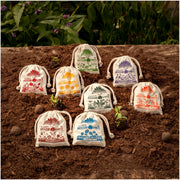
At the end of July, I ordered two sets and gave one away as a gift, which was very much appreciated. The packaging is very beautiful, as is the variety of *bombs*. This year, I haven't dared to just throw seed bombs into the landscape because of the dryness. But something is already growing in the flower box; whether the plants will grow big, I don't know, as it is already late in the year. And my friend also had bombs sprout in her garden. Next spring, we'll really get started.

The sugar lumps were quickly delivered and spread in the garden in suitable weather. About a week later, sprouts appear and we look forward to what grows, making our garden even more colorful and making bees, bumblebees, and butterflies happy!

The seed bombs were very, very well received as a gift! I’m really looking forward to guerrilla-style beautifying the city. Greetings from Leipzig

Received a package for Mother's Day and am already looking forward to the colorful bloom of "wild" flowers...
You need a bit of patience until something happens. After that, you can almost watch the plants grow. The flowers look great and the bees love them. Always happy to order again!!!
The seed bombs were quickly sent on their way to my home and arrived safely in their loving packaging. Everything went so smoothly that I immediately placed a second order! Keep it up...

I ordered the seed bombs as Christmas gifts for friends and family. They were delivered quickly and lovingly packaged. Thanks for that. The instructions are also great. Written humorously and nicely designed. I tied them to the packages with ribbon and with a few glued stars, they make the perfect, original Secret Santa gift.
Whether it will soon become more colorful and greener here will show in spring.

I accidentally discovered the seed bombs in a cute shop in Osnabrück and am thrilled. Beautiful wildflowers grew in my garden and great herbs in the flower box!
Joy! Three small pretty boxes with seed bombs to give away or just throw somewhere :-) I was really happy about the delivery and am excited!
p.s. "megagut" is missing from the rating bar
Super great set! Everything included, nicely packed and clearly labeled, the detailed instructions are beautifully and attractively designed. It was a joy to make and give away the seed balls!
Seedballs in time-lapse
Behind the scenes


